
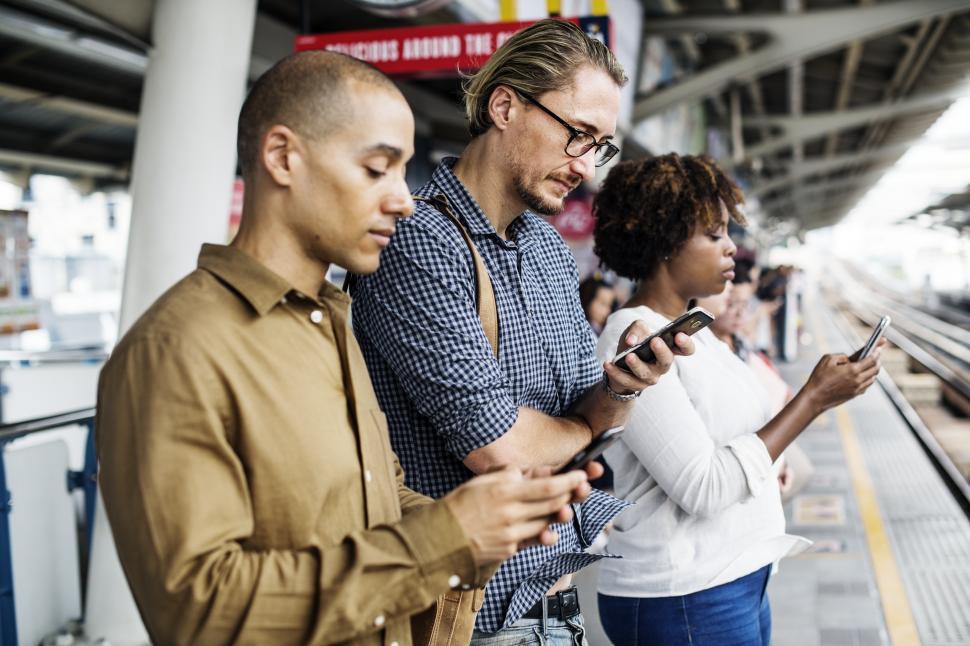
We live in an odd time where a majority of people in the United States have, what would at one point have been considered a supercomputer from a science fiction novel, within their pocket. Through these devices, that a large majority of us own, tech companies have found a way to not only grab our attention but to also control it and use it for their own benefit, “They play your psychological vulnerabilities (consciously and unconsciously) against you in the race to grab your attention” (Harris, 2016). These tech companies like those that have developed YouTube, Instagram, Facebook, and TikTok have found a way to rob us of our attention. They have provided us with a seemingly unending stream of content to consume and all the while profiting from it. Before we were able to better control our experiences with media, they were limited to specific platforms at specific times, take for example what now seems like hundreds of years ago when we had to physically call a person or write a letter, now we can instantly message them through a variety of ways. Or the news, which at one point was obtained through a set window on television or in the morning paper, but now we can easily reach into our pockets and scroll through an unending cycle of news from every corner of the globe, “Take an experience that was bounded and finite, and turn it into a bottomless flow that keeps going” (Harris, 2016).
I have to admit that yes, it is nice to be more connected with the world than we have ever been, but it is also scary to know that our brains have quite literally been hijacked for the profit of giant tech companies. To me this isn’t just a mere high jacking though; we as a society have seemingly become addicted to our phones and social media platforms. I recently did a social media detox where I took five days away from Instagram. One of the most interesting things that I found while doing this was that every time I opened my phone I had what felt like an involuntary muscle memory reaction to immediately navigate to and open the app unconsciously. This to me cemented the idea that these platforms and their designers have fully highjacked and rewired our brains to form an addiction for their profit. In my opinion these platforms don’t bring us the happiness many of us think they do. Instead, I believe that they distract us from things that are real, beneficial, and could bring us more than momentary happiness. However, my own feelings on this doesn’t stop me from using these platforms or my phone, instead I try to prioritize the real world that surrounds me and not the digital. At this point it is almost impossible for anyone to stop using either, but I think there is a way that we can form a healthier relationship with both by limiting ourselves on how much time we spend scrolling through never-ending feeds. While tech companies didn’t set out to highjack our brains through for profit they did, and now we have to find a way to take things back in our own hands before irreparable damage is done.
Reference
Harris, T. (2016, May 18). How technology is hijacking your mind — From a former insider. Thrive Global. Medium. https://medium.com/thrive-global/how-technology-hijacks-peoples-minds-from-a-magician-and-google-s-design-ethicist-56d62ef5edf3


Leave a Reply